
Introduction
Public figures often attract attention because their careers reveal different forms of leadership.
Corporate leadership focuses on markets, organizations, customers, employees, and long-term business performance.Political leadership focuses on public institutions, citizens, policy choices, diplomacy, and national responsibilities.dirk van de put and barack obama represent these two very different leadership environments.Their professional paths developed across separate industries, countries, institutions, and historical circumstances.This article compares their backgrounds without suggesting that they held similar roles.It also separates documented facts from assumptions about any personal relationship between them.
Who Is Dirk Van de Put?
Dirk Van de Put is a Belgian-American business executive with extensive international management experience.He became chairman and chief executive officer of Mondelēz International in November 2017.Mondelēz describes him as an experienced global leader across commercial and emerging-market operations.His career includes senior roles at McCain Foods, Coca-Cola, and Novartis.
These positions gave him experience across food, beverages, healthcare, and international consumer markets.His educational background includes veterinary medicine studies at the University of Ghent.
That environment differs sharply from public office and constitutional government.
Corporate Leadership Experience
Van de Put leads a multinational company with widely recognized snack and confectionery brands.
Mondelēz operates across numerous markets and manages complex international supply networks.
A chief executive must balance growth opportunities with costs, regulation, competition, and changing consumer behavior.His leadership therefore provides a useful example of modern multinational business management.Corporate decisions can affect product availability, employment, investment, and consumer experiences.Those effects remain different from the legal authority exercised by elected public officials.Understanding this distinction helps readers avoid misleading comparisons between corporate and political leadership.
Who Is Barack Obama?
Barack Obama served as the 44th president of the United States from 2009 through 2017.
He previously served as an Illinois state senator and later as a United States senator.
His political career developed through community organizing, law, public service, and electoral politics.Obama studied at Columbia University before attending Harvard Law School.
He later worked as a civil rights attorney and taught constitutional law.His presidential career placed him at the center of domestic and international policy decisions.The presidency carries constitutional duties involving legislation, national security, diplomacy, appointments, and executive administration.Obama also became the first African American president of the United States.
His post-presidential work includes the Obama Foundation and projects connected with civic engagement.
Political Leadership Experience
Obama’s leadership experience developed within democratic institutions and electoral accountability.
Presidents must work with Congress, courts, agencies, state governments, allies, and international partners.They also communicate with citizens during elections, crises, policy debates, and major national events.Obama’s administration addressed healthcare, economic recovery, foreign policy, climate issues, and other public matters.His presidency remains extensively documented through government archives, historical records, and institutional sources.The Obama Foundation also presents educational material about his presidency and continuing civic work.That difference remains essential when comparing prominent leaders from separate professional fields.
Are Their Careers Connected?
Public interest can create assumptions whenever dirk van de put and barack obama appear together in a search query.However, a shared keyword does not automatically establish a professional or personal relationship.Van de Put’s public record centers on multinational consumer-goods leadership.
Obama’s public record centers on government, law, public service, and civic initiatives.Readers should therefore treat claims of a close connection with appropriate caution.Reliable reporting should identify evidence before presenting a relationship as established fact.This approach improves accuracy and supports stronger search quality.
Comparing Their Leadership Environments
Corporate executives and presidents both make consequential decisions, but their authority operates differently.A chief executive leads through corporate governance, organizational structures, markets, and shareholder responsibilities.A president operates through constitutional powers, legislation, executive agencies, diplomacy, and electoral accountability.Both roles require communication because stakeholders need clear information about major decisions.Both roles also involve pressure from competing interests and rapidly changing circumstances.Their similarities therefore concern leadership challenges rather than equivalent authority.Their differences become clearer when examining accountability, objectives, and institutional constraints.
Communication and Public Visibility
Public communication plays an important role in both corporate and political leadership.
Executives speak with employees, investors, analysts, customers, journalists, and industry organizations.Presidents address citizens, lawmakers, foreign leaders, journalists, and international institutions.Both leaders operate in environments where statements can receive extensive media attention.Clear communication can help explain complicated decisions and reduce confusion among audiences.Political communication also involves public policy, democratic debate, and electoral accountability.The different purposes of communication make direct comparisons incomplete.
Decision-Making Under Pressure
Leaders in both sectors regularly face uncertainty, competing priorities, and incomplete information.
Business executives may respond to inflation, supply shortages, regulation, consumer trends, and market competition.Presidents may respond to economic shocks, security threats, legislative disputes, diplomatic challenges, and emergencies.Each environment requires information gathering before leaders make significant decisions.The consequences can extend beyond immediate headlines and influence institutions over time.Responsible analysis should therefore examine evidence rather than rely on personality-based assumptions.
Global Perspective
Van de Put’s career reflects extensive international exposure across consumer and commercial markets.His previous positions included responsibilities connected with international businesses and diverse regional markets.Obama’s career also developed within a globally connected political environment.Both careers therefore demonstrate the importance of cross-cultural communication and international awareness.Business leaders seek sustainable organizational performance within competitive markets.Presidents pursue public objectives while managing national interests and international relationships.
Lessons for Modern Leadership
One useful lesson involves adapting leadership methods to the surrounding institution.A corporate leader must understand customers, employees, products, competition, capital, and operational execution.A political leader must understand citizens, institutions, law, policy, diplomacy, and public accountability.Effective communication also requires adjusting language for different audiences and responsibilities.Leaders can build credibility by explaining decisions clearly and acknowledging relevant limitations.These principles apply beyond famous figures and can help readers understand leadership generally.
An Evidence-Based Reading Approach
Search engines often combine names because users explore possible relationships between public figures.That combination does not prove that the individuals worked together or maintained a close connection.They should also distinguish primary sources from commentary, social posts, and unsupported claims.This evidence-first method reflects practical content research principles used in quality publishing.It helps prevent repeated misinformation from becoming accepted simply through frequent online repetition.Strong articles should explain uncertainty instead of filling gaps with speculation.That approach also improves reader trust and supports responsible search-oriented publishing.
E-E-A-T and Reader Trust
Experience matters when an article explains complex public and corporate careers.A useful article should demonstrate careful research, clear sourcing, and transparent treatment of uncertainty.Expertise comes from understanding the institutions, terminology, timelines, and responsibilities involved.Authoritativeness improves when writers rely on official biographies and credible historical records.This article follows those principles by separating documented roles from assumptions about personal connections.That verification process creates stronger foundations for informational content and long-term audience trust.
Semantic SEO Context
Semantic SEO works best when content answers related questions naturally and comprehensively.
Important concepts include leadership, corporate governance, presidency, business strategy, public service, communication, and global markets.Search engines can use these contextual relationships to understand the article’s subject more clearly.Natural language matters more than repeatedly forcing one exact phrase into every section.This strategy can improve topical depth while keeping the article useful for human readers.Strong structure also helps readers scan headings and locate specific information quickly.
Why People Search These Names Together
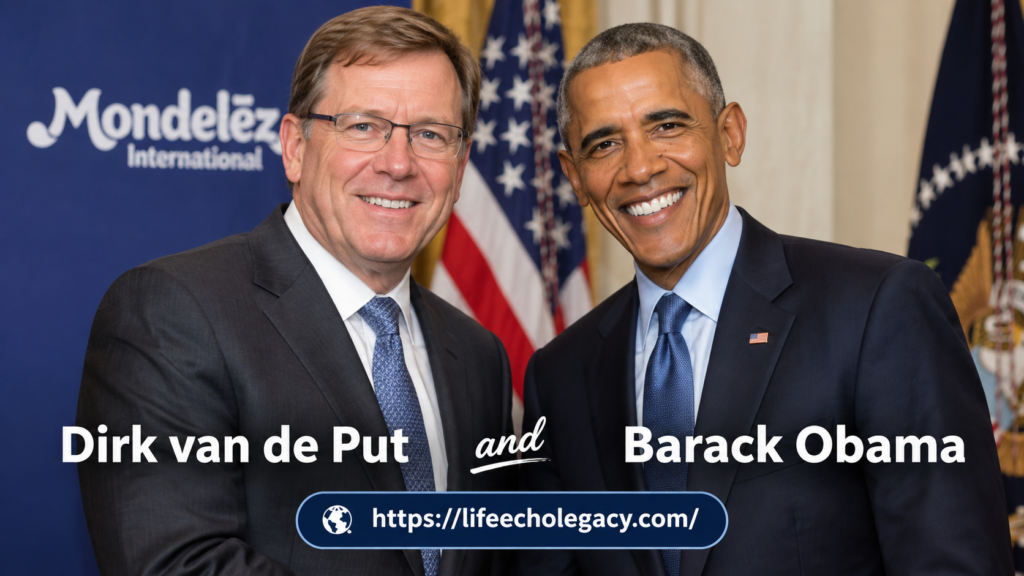
Users may encounter dirk van de put and barack obama through business articles, leadership discussions, interviews, or online searches.They may also search for a photograph, event, meeting, or possible professional connection.Reliable verification requires checking dated reports, official records, and credible institutional sources.This distinction protects readers from confusing search associations with documented relationships.A well-structured article can answer curiosity without manufacturing a dramatic narrative.
What the Comparison Reveals
The most important difference involves institutional responsibility rather than personal style.
Van de Put’s role centers on corporate leadership within a multinational consumer company.
Obama’s role centered on constitutional government and national public service.
Their professional responsibilities therefore involve different goals, stakeholders, rules, and accountability mechanisms.
Their careers can still illustrate common leadership themes such as communication and decision-making.
Frequently Asked Questions
1. Who is Dirk Van de Put?
Dirk Van de Put is the chairman and CEO of Mondelēz International.
He has extensive experience in global business leadership.
2. Who is Barack Obama?
Barack Obama served as the 44th president of the United States.
He also worked as a senator and community organizer.
3. Are Dirk Van de Put and Barack Obama connected?
No major professional connection appears in reliable public records.
Their careers mainly developed in different fields.
4. What leadership qualities do they share?
Both have experience with communication, strategy, and leadership.
However, their professional responsibilities are quite different.
5. Why do people search these names together?
People may search for comparisons, photographs, or possible connections.
Search results alone cannot confirm a personal relationship.
6. Where can readers verify their information?
Readers can use official company and government sources.
Reputable news organizations can also provide additional context.
Conclusion
The careers of dirk van de put and barack obama illustrate two distinct leadership environments.One career centers on global corporate management and consumer business operations.The other centers on constitutional government, public service, and national leadership.Their differences make the comparison informative when presented with careful factual context.Readers should avoid unsupported claims about personal connections or shared professional activities.Evidence-based research remains the strongest way to understand both careers.A clear comparison can satisfy search intent while preserving accuracy, context, and reader trust. visit my site